
The complex unity that is the person appears to have a variety of forms. These forms are mental constructs representing the different ways in which he can be understood. They reflect both the underlying structure of the person and also the framework used by the observer in approaching the subject matter. The rational mind extracts and organizes information about the person into categories; two such categories are those of mind and matter. These aspects of the person can be thought of as two separate dimensions which are not so much interrelated as they are different ways of describing the same event. A person can be discussed in terms of the symbols, feelings and meanings that make up his existence in the world; he may also be conceived of as a complex array of physiological events. Both views are correct and important in helping one gain a greater appreciation of the individual and his life situation. The person is, at the same time, a completely psychological being and a completely physical entity.
Physically, the person-in-the-world comes into existence in several ways. He is part of an evolutionary process, the current product of the lives that went before him. He is also one in a vast number of interrelated links that forms the chain of life on earth. Light from the sun is utilized, along with a variety of material building blocks, to form simple life forms and plants that are consumed by other living organisms. The person is one element within the biosphere that is the earth; he exists as a result of his having transformed other elements of his environment into himself. The person can, in addition, be seen as brought into physical existence through the action of the universal properties that create and define matter and its interactions. Such principles as matter, electromagnetic interaction, gravity and so on describe the processes through which the person, as a participant within the universe, is generated.
The structure that constitutes the physical universe is brought into existence as part of a creative process which also sees the elaboration of the psychological dimension. Being is their ultimate ground and the creative centre from which the Totality emerges. Contained within any part of the Whole is the Being from which it emerges.
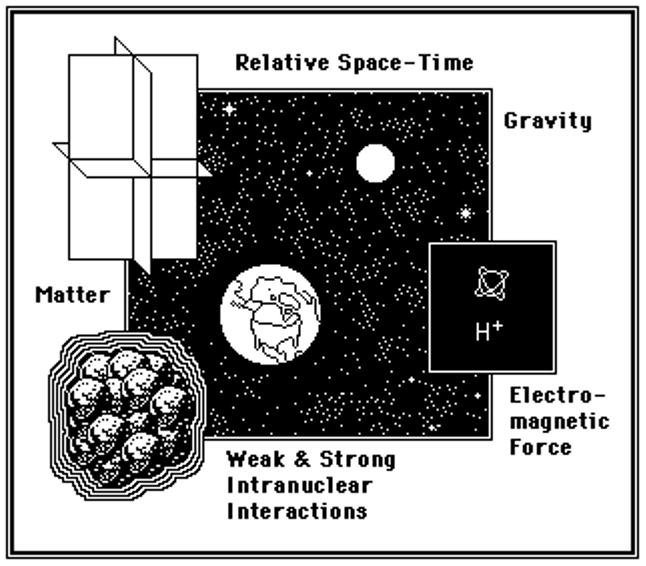
The Physical Universe.
The Basics of the Person as Matter: Science tells us much about the physical dimension of the psychophysiological unity which we are. From what is known in the physical sciences, we can speak of ourselves as being essentially matter undergoing the four interactions of nature which are weak and strong intranuclear, gravitational and electromagnetic forces within relative space-time frames of reference. These are universal principles which simplify and make understandable the structure which underlies the surface complexity of the known physical universe. Because the person is a physical entity, they also describe him.
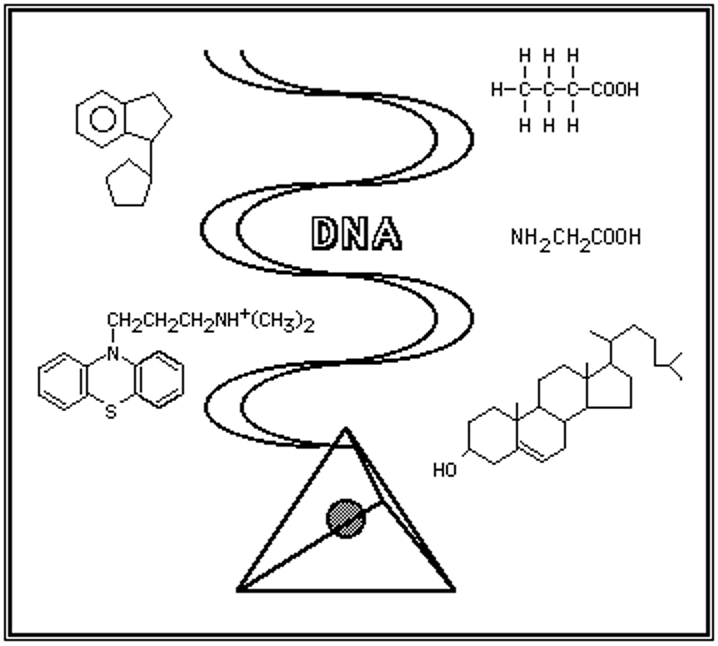
The Carbon Atom.
Subatomic particles combine, forming the positively charged nucleus of the atom which, in turn, attracts negatively charged electrons to the space which encircles it. The electromagnetic force which describes and accounts for this process is the same property which joins atoms together as molecules. Because there is matter existing in space-time and interacting in specific universally consistent ways, the Carbon atom is possible. Carbon is of supreme importance in life as it is the essential building block of organic substances. What makes for this unique quality is its capacity to form four covalent bonds with other atoms. Because of this Carbon atoms can join in intricate and complex molecular chains which also may include other elements such as Hydrogen, Oxygen and Nitrogen.
Because of the existence of the Carbon atom with its particular chemical properties, biochemistry is possible and hence biology. Perhaps the most amazing of carbon-based molecules is that of deoxyribonucleic acid (DNA). Phosphoric acid, a sugar, and four nitrogenous bases (two purines and two pyridines) combine to form two lengthy trains of complementary helices which have the astounding ability to self-replicate and also code for essential cellular constituents and processes. The molecule reproduces itself as the double-helix separates and each strand assimilates complementary bases with the assistance of other molecules that were originally coded for within the pattern of bases within the DNA. Through the activity of RNA, the pattern of bases is translated into one of amino acids on proteins. Proteins go on to provide the enzymatic activity that allows for cellular metabolism, as well as providing much of the structure and form of the cell. Each DNA molecule, coiled up on itself and combined with proteins, forms a chromosome. During the process of cell division the DNA replicates itself and forms identical chromosomes which separate and migrate to opposite ends of the cell which then proceeds to split itself in two. Because changes, resulting from a variety of factors, can occur in the DNA structure, we find a constant process of mutation occuring in nature. This process is understood as an important primary factor explaining the diversity of life on earth. Whether the new organism, characterized by the new proteins it produces, survives to replicate, determines whether there will continue to be organisms with similar traits. Within the basic structure of the universe, then, there lies the possibility of evolution and hence ourselves.
Whether this is interpreted to mean that life is a chance occurence, or the converse, that there is a meaning or destination which was set at the beginning of time, it remains a valid fact that the structure of Carbon makes possible the process by which increasingly complex molecules combined in a primordial soup covering the earth and formed the first cells. These complex collections of biochemical reactions, flourished as they continued to divide, incorporated new material within themselves and overcame destructive elements. The evolutionary process is associated with changes in DNA base sequences that result in the development of cells having new qualities; it may be that certain cells divided, in the earth’s remote past, giving rise to offsping that entered into a symbionic relationship because of their each possessing specialized functions not possessed by the other. Perhaps it was in such a way that the first multicelled creatures came into existence. Whatever many other factors were and are involved in such a intricate and mystifying process, this unfolding of life, whereby increasingly sophisticated organisms, and we ourselves, have been brought into creation, this miracle of personal existence, is intimately and necessarily tied to the structure which is the physical dimension of the universe.
The single-cell creature has form, motility, specific activity patterns and other traits which are also found in multicellular creatures. Higher life-forms are more complex in that they also involve the development and interaction of specialized cellular systems. Whereas single-celled creatures divide into two almost completely identical cells, more complex organisms undergo a developmental growth stage in which a single fertilized egg cell divides into increasingly diverse and specialized cells. In the person, among the various cell types, are those, for example, that contract and relax to provide locomotion through muscle action, those, such as red blood cells, that transport substances (oygen in this example), cells that detect foreign organisms and attack them and cells that secrete various substances. Among the latter are those that produce the substance of bone, that release digestive juices and cells that produce chemical messengers used in the regulation of bodily function. Chemical messengers may act at a distance as do the hormones or may affect neighbouring cells with which there is a direct communication. The neuron is such a cell that is involved in the processing of information within the peripheral and central nervous systems.
The nervous system may be thought of as an elaboration of processes that occur in more primitive organisms. Whether it is a singlecellular or multicellular organism, it is alive because substances are brought into itself, broken down and transformed into its own bodily substance; in addition, toxins are denatured, expelled, escaped from, or otherwise dealt with. Living organisms are thus intimately linked to their environment and it would be incomplete to describe a life-form without reference to that which exists external to it. One cannot imagine living creatures existing apart from their environment; the organism must be able to detect and incorporate what is outside the cell membrane and must also deal with noxious events that threaten from either the internal or external environment. One can imagine single-cell creatures meeting and avoiding physical elements in the environment by undergoing membrane and intracelluar changes on contact. Just as the single cell perceives its surroundings, we perceive our’s, though with infinitely more sophisticated and specialized means. Because of this complexity, we are able to react to a greater range of stimuli and with a greater repertoire of responses. The system of communication that allows for this relationship between the person and his world involves interconnected tracts of nerve cells which undergo and pass on to one another, particular cellular reactions.
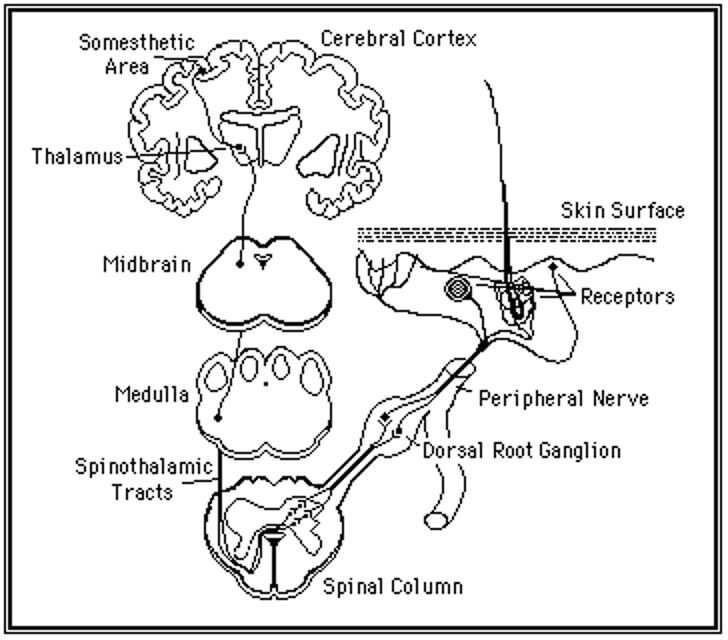
The Sense of Touch
There is a complexity that has been achieved in the evolutionary process whereby cells, having specialized functions, act in concert through elaborate means of communication and produce the finely detailed experiences that characterize the person. The intricacy involved in the perceptions, thoughts and feelings that form the moments of our lives, one can only contemplate in awe. This touch-paper-vision-word that here exists, is a wonder that seems ever more miraculous, the more we learn.
The Nervous System: The nervous system consists of the brain, spinal cord and nerves that receive and transmit signals to the various systems of the body. The cells that are specialized for carrying and passing on signals within the nervous system are the neurons or nerve cells; they carry the actual transmission of impulses within the system. Interstitial cells are the other group of cells which characterize the nervous system; these cells have important functions such as providing structural support, transporting essential chemicals and increasing the velocity of impulse conduction in long-range transmissions. Neurons are made up of a cell body, dendrites, which stretch out to meet the incoming processes of other neurons, and an axon which transmits the message that the neuron has fired, onto other nerve cells.
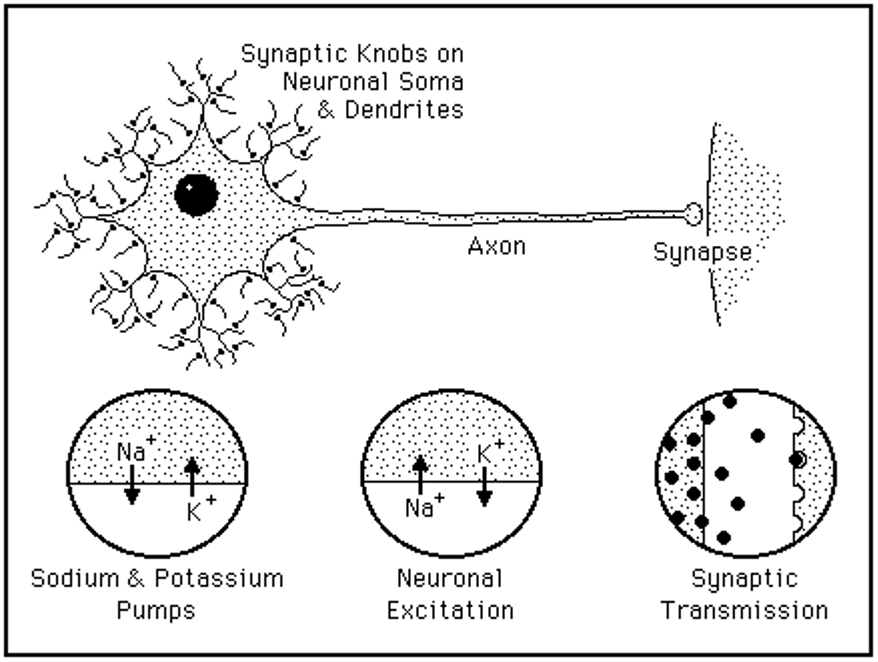
Interneuronal Communication
Chemical pumps located at the cell membrane are able to maintain specific concentrations of salts within the neuron’s cell substance. The cell takes in Potassium and pumps out Sodium in order to maintain the desired concentrations. In dissolved form, Sodium and Potassium are positive ions, meaning that they carry a positive electrical charge; this is due to the individual atom’s loss of an electron, which is that part of the atom associated with a negative charge. Chloride is negatively charged in solution because these atoms each pick up an electron. The difference in the ionic concentrations that results due to the pump action, produces a difference in charge between the interior and exterior environments of the cells. A nerve cell is said to fire when the concentrations rapidly reverse; when this occurs, Sodium enters the cell and Potassium leaves. There is a resulting change in the potential difference between the internal and external environments termed a depolarization. Once there is this switch, the chemical pump resumes its action, thereby returning the cell to it’s resting state. This process, happening at one location on the cell membrane, will cause the cell membrane to become more permeable in adjacent areas. Here there occurs again a reversal in ionic concentrations and thus one sees a spead of the deporarizing activity throughout the cell surface.
The “firing” of a neuron, then, involves a change which has at least 3 components: a change in cell membrane permeability, a shift in concentrations of Sodium and Potassium, and a reversal of the electrical potential that exists between the solutions that are found on either side of the membrane. This change radiates out, along the surface membrane, from the point where the process originated and travels thoughout the entirety of the neuron.
By this means a “message” is carried, to and from the cell body, down the long arms of the nerve cell, called “axons” and “dendrites”. Neurons branch out as dendrites and come into contact with the axons of other nerve cells. Dendrites act as receptors which pick up the “message” that communicating neurons have fired and then transmit the ensuing nerve impulse onto the cell body. Axons, on the other hand, transmit the impulse away from the cell body to other cells: other neurons, muscle cells, cells in glands, in blood vessels, and so on. Interneuronal communication takes place through the action of chemical mediators which are produced and stored within the neuron. The area where the axon of one neuron meets another cell is called the synapse; the synaptic bulb (located on the terminal end of the axon) releases specific neurotransmitters which signal, to the receiving cell, the fact the first cell has fired. These complex molecules, which are released into the synaptic cleft, have a particular shape which fits into a complementary receptor on the adjacent neuron. When the neurotransmitter is attached to the receptor, the receptor undergoes a specific alteration which, in turn, sets off a series of reactions culminating in a the change in the permeability of the membrane of the receiving cell. This change in permeability allows for an alteration in the concentration of ions within the internal environment of the cell. In the case of excitatory neurons, the change is such that the cell becomes less negatively charged with respect to the outside; where the “message” is an inhibitory one, the charge becomes more negative. Many neurons communicate to each neuron; the release of transmitter substance from one may not be enough to fire the receiving neuron. In addition, the release of transmitter molecules in an inhibitory synapse would tend to prevent the firing of the neuron. As more excitatory synapses are activated, however, the charge within the receiving area of the cell reaches a critical level which results in a massive change in the membrane permeability and, thereby, produces the depolarization which characterizes the firing of a neuron.
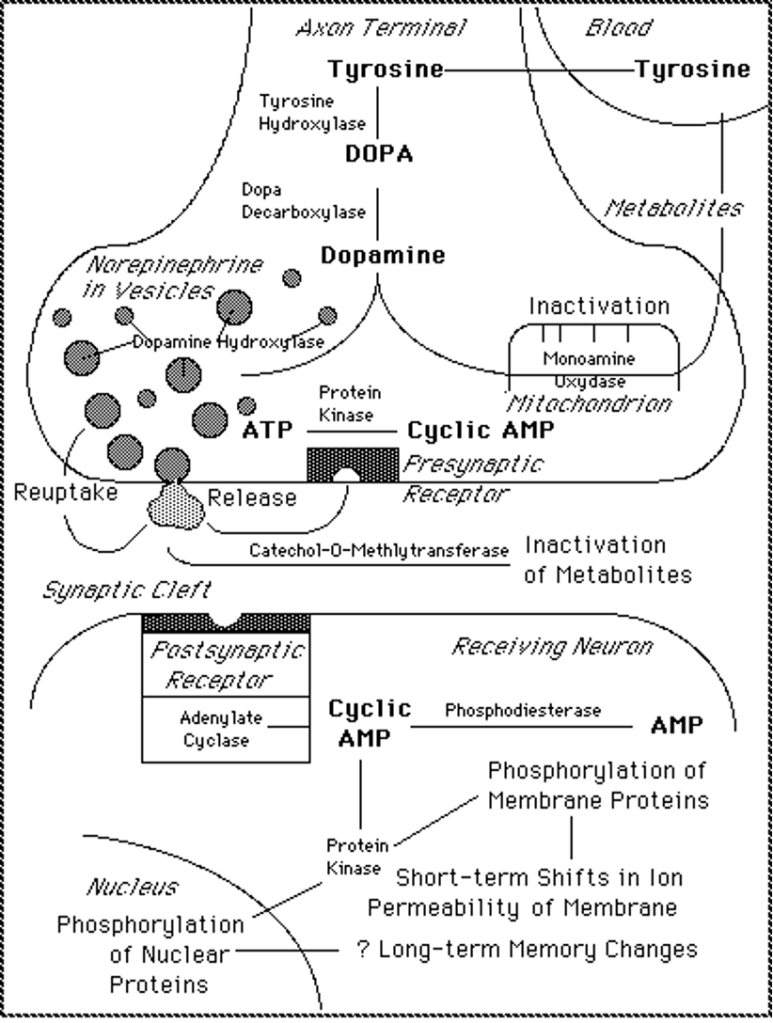
The Synapse.
A neuron, then, has receptors to which specific chemicals attach; these receptors are altered in the process thereby producing changes in the surrounding membrane of the cell. This permits a shift in ions and hence a change in the charge of the internal cellular environment which may reach a point that triggers the firing of the neuron. As the neuron fires, the membrane permeability is increased and then reverts to its resting state. The result is that of a travelling charge which ultimately moves down the axon to a synaptic bulb containing the neurotransmitter. When the impulse reaches the bulb, it cause the release of the chemical messengers into the synaptic cleft thereby exciting or inhibiting the next neuron. After the chemical messengers are released, they may attach to the receptor, or be taken up by the releasing cell or be broken down by enzymes within the synaptic cleft. This process is carried out between billions of cells of differing types, using different chemical substances and resulting in different effects. It underlies the complexity of information processing by the brain.
Neuronal communication patterns are organized in such a manner that, moving from the periphery, to the spine, into the midbrain and onto the cortex, specific neurons represent events of ever greater complexity. Neurons are stretched out, meeting one another. The result is an infinitely complex maze of organic wiring. Mapping of the nervous system involves the determination of which areas are related to the various activities that characterize the person. This involves an examination of neuronal firing in response to specific stimuli and, conversely, what the experiential and/or behavioural result is of electrical stimulation of specific neurons. Such studies have revealed that neurons along the pathways from the periphery to the cortex, are associated with simpler phenomena the closer they are to the peripheral end organ; the further the neuron is from the sensory or end organ, the more processed is the information that its firing represents. Studies have also shown that there is a specific organization of the brain such that each area has typically, its own particular function.
For example, at the level of the retina of the eye, receptor cells react to certain frequencies and intensities of light and transmit the message that they have reacted, onto specific neurons still within the retina. The information is processed through the action of excitatory and inhibitory neurons affecting one another. Still at the level of the retina, there are neurons which signal that there is a contrast border with light on one specific side and dark on the other. Others signal that a light is turned on,and yet others, that a light is turned off. The axons from retinal neurons transmit the fact of their having fired, on to neurons in the central core of the brain (the Lateral Geniculate Nucleus of the Thalamus). The information is then passed on and processed further, through interneuronal communication patterns in the occipital area 17 of the brain. Damage to this and preceding neurons along the pathway, leads to blindness. Areas 18 and 19 are visual association areas in which present visual experience is related to that of the past, thereby permitting a recognition and appreciation of what is seen. Damage to these latter areas results in an inability to understand what it is that one is seeing. Electrically stimulating these areas will produce flashes or simple forms such as lines; stimulation of nearby temporal areas elicits complex visual scenes such as those that exist in vivid memories or in dreams.
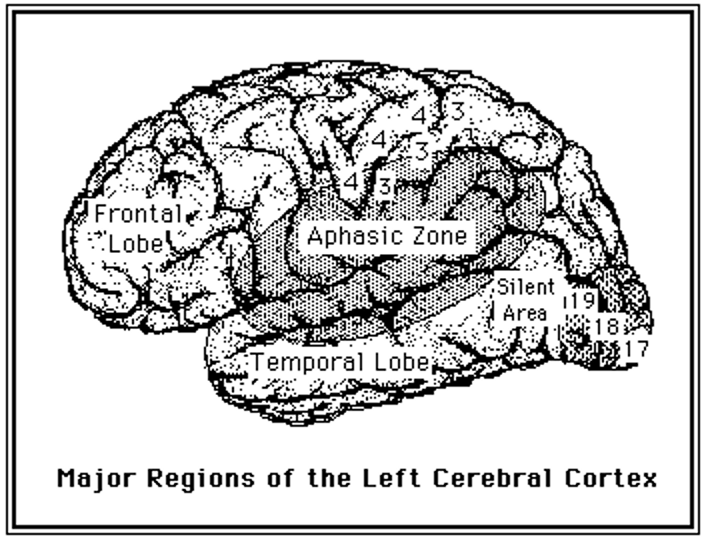
Major Regions of the Cerebral Cortex
These patterns of neuronal interconnectedness develop partly automatically but also require interaction with the environment. The evidence suggests, for example, that there are feedback mechanisms involved in visual perception such that the creation of visual space requires motor activity. It was found that persons born blind secondary to congenital cataracts were able to distinguish figure from background after corrective surgery. Whereas such individuals are able to organize objects according to their colour, they are initially unable to distinguish the geometric configuration without touching the object. The knowledge is not seemingly transferrable from one sensory modality to another. This suggests that there are “wired-in” aspects to the neuronal processing of sensory information but the further elaboration is required though learning. Interestingly, learning can interfere with the “pre-wiring”. In strabismus, the confusing double image that results from the eyes’ being “crossed” is alleviated as cells that would code for complex visual forms lose their ability to do so in one of the cerebral hemispheres. The eye is said to be lazy though it is the cortex that has “shut down” some of its function in order to maintain a coherent sensory experience of the world. The body is clearly a whole within its environment. At conception, where the single egg marks the beginning of the process of human development, the cells begin their process of differentiation and specialization. The “wiring” is elaborated through fetal development and into childhood, presumably continuing as long as new learning is taking place. Throughout, the influence of genetics is crucial; but it is the interaction with the world that determines which of the potentials mature and in which manner.

Localization of Brain Function
The processing of internal and sensory information is carried out within specialized areas of the brain. Broadly speaking sensory information is processed towards the back portions of the brain, while action is planned and orchestrated through activity in the front areas. We have already looked at vision which is elaborated with ever greater complexity in the areas which encircle the very back of the brain – the occipital area that receives the initial information from the inner core of the brain. The typical areas of where various brain are localized are illustrated in the above diagram.
The area of somatosensory (touch) perception is located posteriorly to a large fissure that runs in a vertical direction near the midpoint on either side of the brain’s outer surface. On the anterior side of this fissure, lies the area that regulates voluntary motor function. Posterior to the area representing the basic sense of touch, are areas involved in the interpretion of these sensations. Because of the activity in these interpretative areas, one can, for example, feel the difference between a circlular and square object. It is because of this localization of learning that a person, blind from birth, who later has his vision restored, must relearn to distinguish shapes in the visual sense though he may be otherwise quite adept at distinguishing them by touch. There is a symmetry to the brain, reflecting that of the body, such that different functions are located in similar areas bilaterally. Activity on one side of the brain is related to events on the opposite side of the body. The right brain processes information having to do with left-sided functions; the left does likewise with respect to the right side of the body. However, though the hemispheres may appear superficially mirror images, there are differences in terms of the processing of abstract information. For example, bilaterally on the superior part of the temporal lobe, at about a midway position, is located the area that represents basic sounds. Investigation of the surrounding cortex reveals neurons that fire in response to more complex sound forms. On the left hemisphere, however, in most people the interpretation of sounds includes the decoding of speech. On the right, in the majority, the interpretation would be more on the lines of appreciation of music and melodies. The left side tends to be the more rational and verbal, and the right, the more artistic and spatial. This functional differentiation between the two hemispheres, is also true for both the sensory modality of sight and hearing.
One can broadly generalize that “input” is received and processed posteriorly and that the “output” is organized, and transmitted from the anterior part of the brain. Motor activity is voluntarily initiated through the activity occuring in Area 4 of the brain. At the lower end of this long stretch of cortex is that which codes for movements of the head and mouth. Some distance in front of the lower end, usually on the left side, is the part where speech is generated. The large prefrontal area is what distinguishes human brains from those of other animals. It communicates to not only the neighbouring motor areas, but also to the other lobes, providing it access to sensory information, and additionally to the limbic system which mediates emotional states. The prefrontal area has thereby, the capacity for such mental activity as concentration, the elaboration of thought, self-control, judgement and insight.
Emotional response is linked to the Limbic System which is an interconnected collection of cerebral structures which are also involved in memory and the bodily manifestations of emotion. Among the components are parts of the temporal cortex which would in turn communicate with other parts of the cortex; these areas represent the more complex features of emotion which would include the understanding of affective states and the modulation of their expression. While this cortical involvement represents the more developed aspect of the limbic system, at the other end of the emotional spectrum, governing the more primitive bodily responses, there is the hypothalamus which regulates autonomic activity: blood pressure, sweating, heart rate, respiratory rate and stomach acid secretion. The more one attempts to understand the neurological basis of emotion, the clearer it becomes that the brain functions as a unit rather than a collection of discreet centres of control. In attempting a description of emotional response, it further becomes difficult to separate brain function from that of the total body. And when one considers that emotional resonse is tied to events occurring external to the body, it becomes additionally difficult to separate the body from its environment. The realization that emotional response is a reaction to the meaning of what has transpired in the environment, brings home the fact that physical and psychological are a unity. The person operates as a whole; while it is necessary to mentally dissect the whole into component structures, that structure remains complete.
The Physical Basis of Behaviour: The higher the organism on the evolutionary hierarchy, the greater the complexity and malleability of its behavioural patterns. Fish, for example, are able to move in unison in response to a threat probably because they perceive and react to the same stimulus in the exact same manner. The learning of avoidance behaviour in these schools would prove chaotic for the group, as each fish would respond in its own way on the basis of past experience. With us, it is our ongoing interaction with the world about us: our families, our culture, which determine much of the organization and interpretation of sensory stimuli and as well as our reaction patterns. Our perceptions and behaviours are learned to a remarkable degree. Because of this we are more adaptable and also more in need of one another than other animals. Our complexity, our adaptability makes us necessarily social animals.
The plasticity that characterizes human activity is founded on an innate capacity to develop along certain lines. Depending on environment cicumstances, the person will grow, both physically and psychologically, more or less fulfilling this potential. In terms of our social relatedness, in addition to the immediate reaction that an event may produce, the person responds to other persons’ reactions. An expression of affect in one person, under normal circumstances, tends to automatically reproduce a similar response within the other’s conscious sphere. A baby’s cries, for example, the noise it makes and the contortions of its body are signals, communications that grab one’s attention and arouse a sense of urgency that one can very well imagine is happening within the infants experiential world. Depending on one’s experience there will be differences in the emotional and behavioural response but the differences will be remarkably minimal among the vast majority of people. We have a built in capacity for understanding one another, for empathizing with the other’s position though we are otherwise numb to the actual experience he is undergoing.
In trying to understand such phenomena in terms of brain function, one may recall that there is an interwoven connection between all areas of the brain that in the end allow for the perception of and processing of sensory information about one another. Because of the complexity of the system it is easier to imagine how things go wrong than to ponder how it is that the variations we see are so minimal. In Early Infantile Autism, we are probably seeing the result of variations in the “wiring” of the system. There is a congenital change in the functioning of the brain that does not allow for the typical response to social situations that children will have. The child avoids eye contact for example or uses toys in idiosyncratic ways (which are interestingly consistant among children with this disorder). Under normal circumstances there is a built-in capacity for satisfactory and fulfilling social interaction; this capacity or potential is actualized through the relating of the individual with the world.
In order to optimally engage in social interactions, one must first be able to pick up the sensory information that constitutes communication about the other. In the infant, all the senses: olfactory, visual, auditory, somatosensory, and gustatory convey a sense of what the world and the other are about. Interaction with the environment is essential. Receptors in the “periphery” normally detect and relay messages through the various parts of the nervous system and eventually to the cortex where they are processed and organized as “social cues” according to the person’s past experiences with others. These “social cues” cause an affective and autonomic response. This correlates with activation of neuronal patterns in the limbic, temporal, hypothalamic and midbrain areas of the Central Nervous System. The firing of neurons along various tracts leads to changes in muscle (especially facial), autonomic, and endocrine activity. It staggers the imagination to attempt to visualize how the various areas and pathways of the nervous system work conjointly in the manifestation of the simplest of human interactions.
Though we are typically “pre-wired” to engage in social interaction, this tendency is shaped through experiences involving others. A variety of disorders may arise in the face of life’s difficulties. An inability, for example, to experience an empathic response under certain circumstances, may result from a person’s having had to abandon particular feelings; in avoidance of suffering, he would be unable or unwilling to produce the particular feeling within himself. He would consequently be unable to enter into an empathic relationship with the other. This is particularly tragic in the case of painful affects, as the person, who is unable to allow himself the experience of pain, is likely to be unaware of painful affects in others and thereby unwittingly bring misery onto others as well as himself.
In attempting to imagine what could be the neurological aspects of psychological phenomenon such repression, one may postulate that they involve the inactivation of a particular response through an inhibiting action of some neurons on others. The brain would be “pre-wired” in accordance with a genetically based system of meanings. There is a potential life story that originates at conception and flowers under normal circumstances, allowing the person to express that meaning which he is. Depending on the physical, familial and social environment, this meaning would find its particular expression. Changes in the psychological structure of the person would be related to alterations in the “wiring” of the brain. Early experience and learning are so important because they mould the system and are the foundations on which the social and emotional life of the person develops. In trying to understand the person as a relational being, we are compelled to address questions that involve the universe as a whole.
Let us, for example, contemplate the phenomenon of a smile. It is a physical reaction which coincides with an inner emotional state of happiness and a particular level of autonomic functioning. It is essentially a way of communicating to the other, that one is experiencing this emotional state. Normally such an expression of affect by one person is likely to reproduce a similar one within the other. This need not necessarily be the case, however. A person may have met evil under this guise too many times; the response to a smile might then, be one of anxiety and guardedness. In understanding what a simple smile is about, the various components include: the facial musculature, the peripheral nervous system providing sensory input of environmental events and output to the facial muscles, and a series of interrelated Central Nervous System structures which are organized to perceive the external event, understand its meaning and react emotionally; this, of course, is linked to the past experience of the individual, which has molded the processing of information, and the genetic make-up which determined who could be possibly be created as this particular individual. We are, from this point led to considerations that involve the family and society in which he lives, their histories and current structures; in pursuing the question further, we are led to contemplation of the underlying structure of the universe as a whole: its physical properties, abstract principles such as truth, beauty and courage, and the fact that it exists at all.
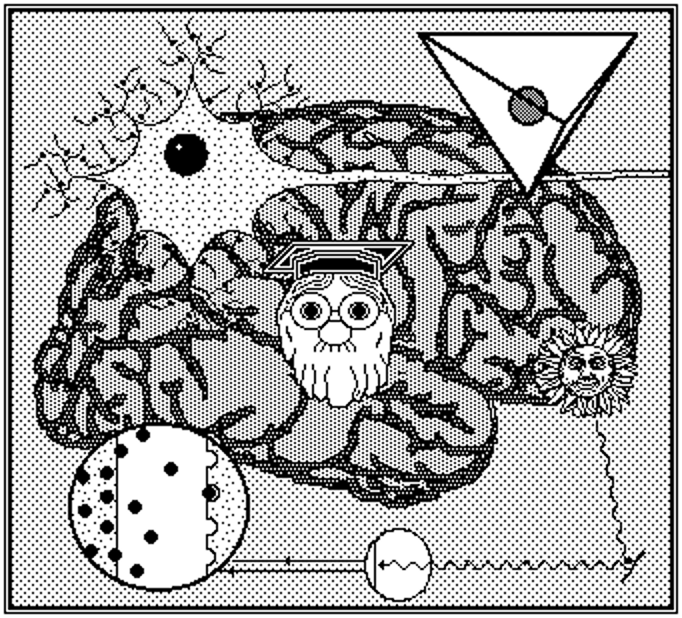
Unity of Mind and Body
There is a psychophysiological unity of the person in the world; looking at him from one perspective we see the physical; from another we see the psychological. Mind and body are a single entity in the person. The comprehension of these words is organized both as a structure of meaning and of matter. These ideas, though related to others which broaden out to encompass the entire universe, are at the same time, physical events. The material structure here defines the actuality of these thoughts as brain events, the fingers that type them out, the eyes that catch the light and transform patterns of light into ones of nervous system activity. This event is also transpiring as a manifestation of another level of structure which can be understood in terms of psychosocial phenomena. The various level of Central Nervous System activity are parts of a whole developing and functioning as a whole which extends into the world. The experience of this paper and these words includes the printed page and an infinitely complex array of neurological events involving countless neurons in the pripheral and central nervous systems as well as muscular, endocrine, and autonomic cellular events. All these elements are inherent in the experience which constitutes a unity of sight, thought, and feelings. This unity includes the page, the person who wrote these words and the person who now reads them. Perception and understanding require not only the objects being studied but also our intact nervous system organized, along another dimension, in accordance with systems of meanings. One can therefore describe any experience as the psychophysical universe, in the microcasm of the person, reflecting back and understanding itself. The
Person and the Physical Universe: The person is essentially whole though the structure which characterizes him has numerous aspects. Because that wholeness extends into the environment, another way to conceptualize his existence is to speak of a person-in-the-world. The person is a participant within and an expression of universal order. The person is one with the world not only through his having a common eternal ground with the rest of creation, but also temporally, in that he participates in the creation of the history that defines his time. Evolution, can be understood from this perspective, as not so much a matter of the survival of the fittest; rather, it is an ongoing process of transformation which is the biosphere that is the earth. The person comes into existence as part of this process. The person is a unity participating within a larger unit that encompasses the universe and That which transcends it.
Though we can speak of unity and wholeness, the very real fact remains that the person exists in a state of separation. While the universe is ultimately One, each of us exists as individuals. We do not, in a state of everyday consciousness at least, experience ourselves and the world from its foundations in being. The reality that ideas about psychological forces, atoms, and molecules relate to, though it is who and what we are, remains unconscious, a mystery. Though I read, speak, move my hands, I remain impenetrable darkness which my intellect cannot illumine. Theories and ideas are all very fine, but who and what am I really? How and why does this occur? The abyss surrounds me.
Exploring this mystery in which we are now participating, we are met with a myriad of impressions, thoughts and feelings. Developing out of the interaction between the world and ourselves, are ideas that deal with the universe as a physical event. The physical universe is one system of phenomena of which the person is a part; it manifests itself in a multitude of forms each of which can be understood as a particular expression of underlying universal patterns of being. Discovering such a pattern, we organize the information as a universal law or principle. We surmise that the truth, which explains the event we are studying, would be valid anywhere. Every aspect of the universe is considered to exist in accordance with known and, as yet undiscovered, laws. In the very contemplation of these ideas, we have as their focus, the universe; these thoughts are, at the same time, structured as physical events making up our central nervous system. With this in mind, we can view this moment as an instance in which the universe is turning in and attempting to understand itself.
Allowing our imaginations drift, we may picture outside this room, billions of people, suns, and galaxies. Our bodies, we may think of as constituted of countless cells and molecules. In terms of time, we can imagine it stretching behind us measured in billions of years to a point where we speculate that major transformations in universal order occurred in the first trillionths of a second during the initial creative explosion. We are specks of light on a rocky sphere hurling aimlessly through a black infinity. By extending our senses through mechanical and electronic equipment, and by strictly controlling interactions, we have been able to construct world views radically different from that of immediate sensory experience. We surmise that forms of single-cell life in the earth’s remote past, survived and replicated because they were able to avoid noxious substances; through the biochemical changes in the suface membrane and ntracellular environment, they saw-smelled-tasted-felt-heard-reacted to their world. With infinitely more complex patterns of communication between specialized cells, we do likewise; specific stimuli result in specific changes within our organism. The process has attained such a level of sophistication that an entire universe of time, space, and people, this experience itself, all come into being.
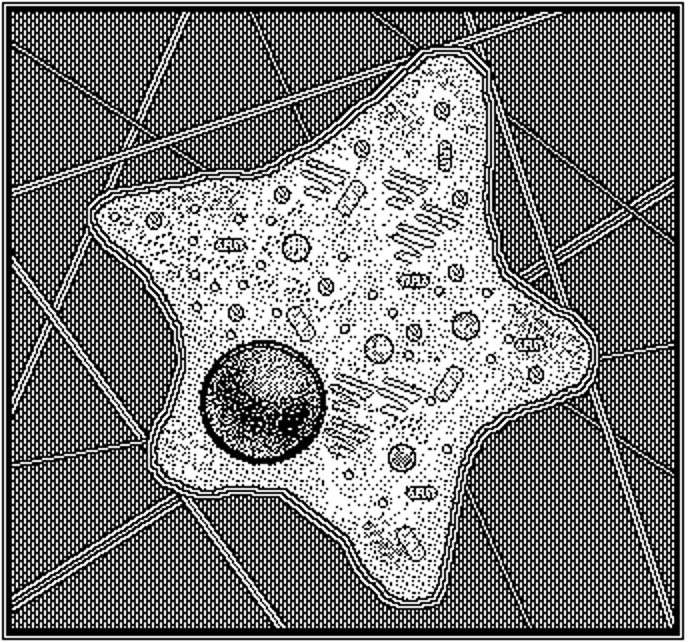
The Single-Cell Organism.
This moment can be described in terms of an “external” reality and, alternately, an “internal” central nervous system event. True in each sense, they are different ways of talking about the same thing. We can begin to describe this paper in terms of the molecules that constitute its substance. These molecules are made up of atoms, which, in turn can be understood as aggregates of interacting subatomic particles and forces. Contemplation of this paper leads us, as well, to questions regarding the nature of light, and the reflection and absorption which produces the effect of black on white. This may lead us to wonder about the sun, what fuels it and what moves the seemingly infinite array of galaxies in the heavens. This paper brings us to contemplate the universe. And yet, where is this universe? Is the sight of this paper not an event transpiring along tracts leading from the retina to the cortex? The understanding of this very word, is it not occurring in the part of the cortex organized to process for the meaning of visual signs? Whether it is an immediate phenomenon like this paper that is being contemplated or more abstract events such as the rising and setting of the sun and that of the earth spinning around the sun, the necessity of a nervous system dividing (detecting and isolating various aspects of) and reintegrating reality, remains the same. Thus one would be equally correct in saying “This is paper;” and “This is my nervous system”. Whatever the underlying reality of this paper is in itself, a nervous system is required to define it in time and capture its existence within the background of the rest of the universe.
Events are cleaved from the whole as they are organized into meaningful patterns; this process that sees the creation of human experience involves physical aspects of the person that tie him to the world about him. Central Nervous System activity seems necessary to feel that a second lasts so long and that the entire universe does not come and go in less than a blink of an eye; it is needed to picture the universe as larger than the head of a pin. While the truly objective would be that which the object is in itself as a manifestation of universal order, we, as rational beings can only begin to approach this form of truth. Explanations, while they point to the truth, never quite reach it; the truths we arrive at are ultimately experiences we have of the particular realities. Thoughts, perceptions and memories, while they are directed towards that which is being experienced, are determined also by the structural properties of the person. Conscious experience is the bond that link the observer to the observed. Involved in experience are structural properties, which are otherwise unconscious but describe the organization of experience and include aspects of both the object and the person.
To illustrate this point, we may wish to contemplate the sun. We can see or imagine it sitting at varying locations in the sky; the particular position is associated with the particular season and time of day. Linking these observations in time, it may also be pictured following certain paths. In trying to make sense of the pattern of motion, we may, further, reverse the mental image and picture the sun as a point around which the earth revolves. The sun may additionally be associated with a curve in space-time which would explain the centripetal action of the earth about it. Each of these observations and descriptions is true insofar as it makes understandable some aspect of the sun and the world in which we live. Each successive statement is a more comprehensive view that contains, within it, an explanation of the previous statement; there is increasing objectivity as the picture becomes broader, involving within it more elements that make up the world. Picturing its motion through the sky explains the various positions; the variations in motion and the originally observed positions are explained by the idea of a solar system. The theory of space-time curvature in turn, encompasses all these ideas and observations. The reality which is the sun within universal order, is here pursued by ourselves as intellect; this idea of intellect is an abstraction which points to our capacity think and organize perceptions. This intellect is one with the images and impressions that develop; yet these thoughts remain ever distant and separate from that which is being contemplated. Though one may imagine what it might be like to be that blazing power, it is still not the sun as it is itself. If anything, we may drift further from reality as we entertain abstractions and conjectures, leaving behind the immediate experience. The reality which is a thought, image or perception of the sun includes the actuality of the sun and the organizational system which is the structure of the event.
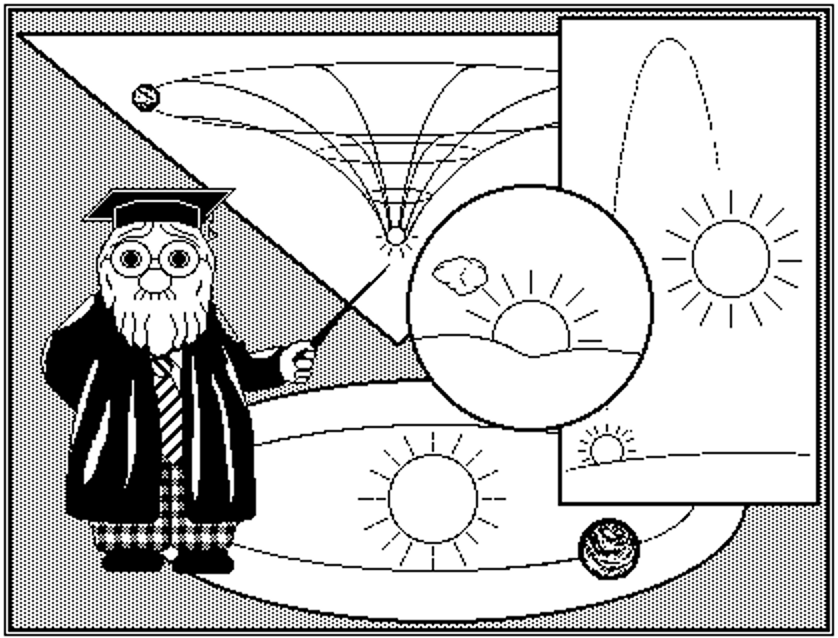
The Heavens.
In searching for greater objectivity, it would then appear that we are ultimately attempting to arrive at a position that will provide us with universal truth: the view that might be seen by God. This perspective would be one in which there was an understanding of the totality as it exists as itself. Since we are objects within the totality, universal truth transcends us and we are therefore unable to reach it intellectually. We cannot imagine universe as It is as Itself; It is too real a phenomenon and too vast in its entirety to be captured by the mind. It cannot be contained within human thought and imagination. Anything we can imagine can only be a fragment of the Totality. What is imagined remains an event emerging from the activity of the central nervous system within its world. Because they are not the Totality, these fragments are not the Truth, but are rather truths that apply to specific situations. The Totality is a concrete reality which comes whole but is understood by the rational mind in parts; one aspect of the Totality is the reality of self-reflection through human imagination.
Knowledge is a form of experience. Though we may extend our senses and use sophisticated means of analysis, the ultimate source of knowledge is the relationship one has with the world. Being empathic creatures who share systems of meaning, we can communicate our observations and understandings to one another. We are thereby able to accumulate greater knowledge than would ever be possible for the solitary individual alone. The study of the person and of any aspect of the universe ultimately rests on an experiential phenomenon. The patterns and structures that are discerned will always naturally contain an element that is the person. There is, hence, no clear-cut difference between subjective and objective points of view. Experience involves a relationship between the observer and that which is under observation; rather than speaking of subjectivity and objectivity, it might seem more appropriate to utilize the concept of distortion. Distortions occur when unrecognized factors enter into the experience whose interpretation subsequently can only be faulty. Science is a human activity; in order to arrive at a scientific truth the minimum requirement is a Nervous System that can detect and process information. Though the senses and our cognitive abilities can be greatly extended and magnified using various techniques and equipment, the hypotheses, laws and principles are human characteristics which necessarily require the existence of a sentient being.
There is clearly always more to the world than what one knows about it. But no matter how much one pursues it with one’s intellect, one is clearly always left with a Central Nervous System event. Does thinking and experimenting bring me any closer to what it is like to be this paper? And though one’s central nervous system is the perception, the understanding of this event, where is it? Where are the neurons, axons, acetylcholine molecules, mitochondria, and DNA? Both this page and we ourselves are invisible. The experience I am having of this paper is my experience even if I decide to examine the paper under an electron microscope or burn it to measure the amount’s of heat, carbon and carbon dioxide that are produced. This moment exists between two unconscious poles, generated as much by what is classified “outside” as that which is seen as being inside our bodies. The duality of subject and object can be thus seen as reconciled in the actual experience of the moment.
It would seem plausible that the entire process is unconscious because of its total involvement in the moment; one would therefore continue to be frustrated in finding oneself and the ground of ones existence because the reality of oneself would lie not in the image that develops but rather in the act of thinking itself. This individual experience of the world is like the top of a mountain surrounded by a sea of unconsciousness. Contemplating the vast unknown, one can imagine oneself an isolated subjective island standing alone against a sometimes-overwhelming cosmos which is projected out onto the darkness. This image too is part of that island, that individual experiential world. It can be restructured in countless ways. This restructuring is knowledge which, though emerging from and helping us get along in life, remains illusion, never complete, always a hypothesis or theory.
In the words of the Upanishads, ” He is the never-created Creator of all: He knows all. He is pure consciousness, the creator of time: all powerful, all-knowing. He is the Lord of the soul and of nature and of the three conditions of nature. From him comes the transmigration of life and liberation: bondage in time and freedom in Eternity.”
Although I would currently agree with much of what is written here, I do see things differently than I did back then. I feel a critique is in order.
Next Page
 Louis Canella, M.D.