
While it is difficult to tease out the degree to which psychological, social, familial, constitutional, and organic factors influence the picture we see when dealing with many personality disordered persons, in this as in other psychiatric conditions, both the physical and the mental aspects of the person are affected.”Mental”, like other illness, is both physical and psychological, and ultimately spiritual in that it shakes the person to his depths and forces him to confront himself.We as healers, attempt to effect a change in the person that comes to us for help. A complete state of health is not brought about by the alleviation of the symptom alone, nor in bringing the patient to a position where she conforms to society’s or our image of what she should be. Overcoming illness would rather seem to involve a return of the capacity to creatively affirm oneself. Health might be described as a state of wholeness of the individual in the world.There will be struggles but the patient will be able to continue and not flee from life. In health tthe person is able to be and hence express herself creatively, thereby gaining fulfillment. As Freud said, “One is able to love, work, and play.”
The healer helps by dealing with the three aspects of the person’s nature: her body, her psyche, and her spirit. The interventions range from doig something to the patient like providing medication to being a catalyst whereby she is better able to heal herself.
The importance of biological factors is quite clear in the organic brain syndromes and reasonably certain in psychotic illnesses such as schizophrenia and major affective disorders. In panic disorder as well there is some evidence of perhaps a neurochemical imbalance resulting in spontaneous anxiety states which are not precipitated by symbolic phenomena. In such cases it is clear that physical therapy in the form of medication has a role to play in the healing of the individual.
Anxiety has been thusfar described as being a manifestation of our existential estrangement from ourselves and the world. In coming to know ourselves in the world we break the unconscious identification with the totality. The result is a profound sense of separation in which our dependent position is all too evident. In an attempt to avoid conditions of anxiety and despair we join one another as a society which provides us with the support to affirm ourselves. We may not have been blessed with the biological, familial, cultural, and other factors which help in the creation of these supports. In such a situation, the person faces his creatureliness, his worthlessness alone and sets about, in his own way, to evade the problem, to shield himself from the anguish inherent in existence. Torment arises out of conflict; in a no-win situation, the person is led to despair. The person becomes his own worst enemy, precipitating in the end what he most feared.
The person comes to understand himself in the psychotherapeutic situation. As the transference unfolds, the patient is able to develop a relationship with nature and its transcendent powers. In the safety of the therapeutic setting, he can begin to explore himself and the world. Though he may initially gain strenghth by using the therapist as a source of power or someone to be manipulated in a self-expansive way, as the therapy progresses his conflicts come to life within the relationship and brought to his attention.
Clearly the intervention can go only so far as to provide the patient with the therapist’s impressions. Ultimately it is the patient who changes, who becomes himself as he chooses how to react within the relationship. He attains a cohesion of self not in understanding the interpretation and not solely by his sense of being understood; rather he becomes himself by his his acts.
Psychodynamic psychotherapy is but one in a number of techniques used in our field. What may be a common thread, what may be involved in the bringing about of change is the identification of the problem which is then set in a theoretical framewok and, perhaps with the help of the therapist’s suggestions, the patient’s acting on it. The key element of all therapies: behavioural, cognitive, psychodynamic, short and long-term, what ulimately effects change is what the patient does (including introspection).
In chronic illnesses as in other cases where we see the patient through aspects of his existential condition, there is a part of healing which involves ministering to the patient. One helps him to accept himself with the illness and adopt an attitude of thankful dependence. This would sound quite condescending if our human condition were any different; but it isn’t. We have no less trouble accepting ourselves, letting down our guard and admitting our lack of self-sufficiency. We may be even more dependent on the social structure into which we have been fortunate to forge for ourselves an enviable position. We are brothers and sisters in the human condition.
As the patient comes to the recognition of both his and the therapist’s inability to lift him above this human condition, we may see a transfer to the real source of power. He doesn’t have to please his parents, his boss, his society, or his therapist, but rather has to find acceptance and strength in his depths, in the very power that creates and maintains him.
A belief system won’t do; the answer has to be as real as the anxiety and despair that he is.
How are we to catch Him, this spirit who “without moving is swifter than the mind; the senses cannot reach Him: He is ever beyond them. Standing still, he overtakes those who run.”
We can break down the approaches people have used to relate to the absolute into four groups. The first, that of good works, is based on the idea that one becomes what one does. This is the way of morality, Karma Yoga. Every deed done for private interest adds to the separation of the ego and insulates it from God. One loves one’s enemies, turns the other cheek. Eventually one comes to mean it as the centre of consciousness gradually shifts from the finite to the eternal Self. Each task becomes a sacred ritual, a gift to God. In this act of surrender, one finds that one’s will is, and always has been that of God, the absolute Witness. The second way is that of knowledge. As our faith is, so are our actions and hence what we become. Through meditations and logical demonstrations, one is led to the conviction that there is more to oneself than the finite. Three aspects to thsis path include: the hearing of scripture, thinking to correct and understand one’s false assumptions, and the shift of self-identification from the transient to the eternal. One pierces and dissolves the layers of the personality, the mask covering what one has always been. This sounds a lot easier than it is> Zen is a tradition that tends to attract intellectually predisposed people who see Satori as a way out of a mental quandry in which they’ve found themselves while pursuing an intellectual course. Trying to understand the mondos, the question and answer dialogues, and find an answer to a koan, a puzzle about the nature of the world is a mental torture designed to eventually, in Suzuki’s words, “wipe out every trace of conceptualization in a most ruthless manner.” They are serious when they want you to produce the sound of one hand clapping.
The third way is that of love. Our desires determine our perception of and our relationship with the orld; they are the ultimate source of personality. All ways to God are ultimately this way. In Catholicism, this way is Christ. Every strengthening of the love for God weakens the walls of our finite prison and though one’s attachment to the world is diminishing, one comes to love it ever more as the reflected glory of God. One comes to love and adore Him with the totality of one’s being: He alone and for no other reason but to love Him. The unknowable Creator is worshipped by repetition of his holy name, through symbols which are the ultimate basis of transference phenomena and by veneration of His human manifestations. In reciting His name in one’s prayers, one’s attention turns closer to Him. God as the ultimate other can also be seen as being at the other end of all transference. He is the world and its source; it is in the end, the relationship with Him that we are attempting to resolve. He is our mother, father, our friend, our child, our lover. He is the father we pray to for guidance and assistance; the father who knows us and helps us grow. She is the divine Mother from whom we emerged, who laughs with us in our joy and cries with us in our sorrow. Jesus is our fiend,:Ram, our Brother. He walks with us sharing our burden. He is our child, a flickering flame of love, to be protected and nurtured. She is our lover, radiant, wonderful; we would spend all of time getting to know every aspect of her glorious body.
When one’s every act, every thought, every breath is for Him, in that surrender, one is united in the Supreme love and surrender.
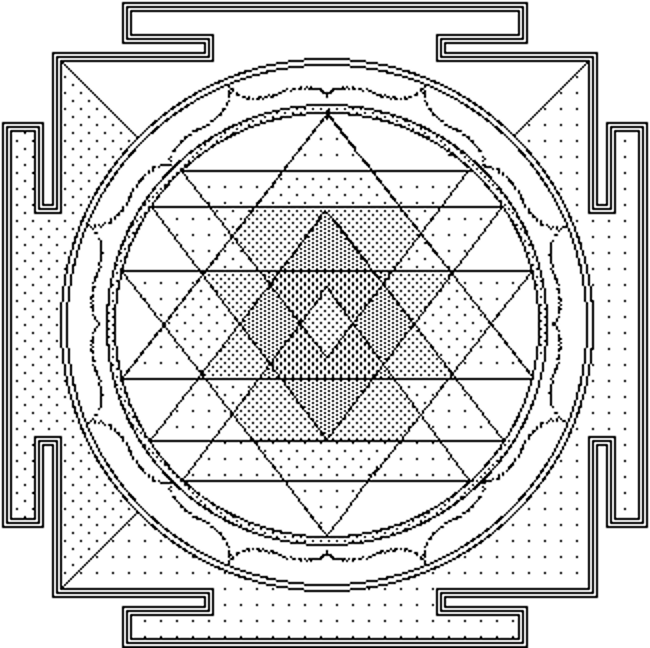
The fourth way is that of willed introversion. Here there are no dogmas; one seeks to find himself. The process can be broken down into seven parts. The preliminary abstentions and observations are meant to quiet the distractions of bodily and interpersonal static. One finds a position in which one can keep quiescent and alert. Breathing exercises are designed to bring about a deeper state of stillness. One procedes to close the windows of the senses. Just as one does not hear the radio when one is deeply at his task, so too, focused on one’s inner world, that of the senses fades. Alone in thought, one attempts to control one’s attention, a task that has been described as akin to trying to “control a drunken monkey with St Vitus’ dance, who has been stung by a bee.” Gradually one finds an increasing peace as thoughts bubble up and exorcise themselves. In focussing the mind at this point, the tiny dot that skims the page, that, while remaining still, wanders from thought to thought, to feeling, to perception, this beingness of this moment is realized as all. Separateness vanishes, subject and object are merged. One’s mind is completely absorbed by God.
Again in the words of the Upanishads: “In the Centre of the castle of Brahman, our own body, there is a small shrine in the form of a lotus- flower and within can be found a small space. We should find Him who dwells there, and we should want to know him. And if anyone asks, “Who is he who dwells in a small shrine in the form of a lotus-flower in the centre of the castle of Brahman? Whom should we want to find and to know?” We can answer: “The little space within the heart is as great as this vast universe. The heavens and the earth are there, and the sun, and the moon, and the stars; fire and lightening and winds are there: and all that now is, and all that is not: for the whole universe is in him and he dwells within our heart.’”
A magic loom weaves these strands of light, sound, thought, and feeling into an all absorbing veil of “me-in-the-world.” Initially undifferentiated, in a state of “primary Narcissism”, the field of consciousness is cleaved by thought and begins to include objects. It becomes polarized into subject and object. The Self, totallyinvolved in the ego’s plight experiences dread and anxiety at its finitude. It tries to shore itself up by reaching for the narcotics of pleasure, the security of property, power, fame, and respectability. Having mistaken its own true good for the immediate good of the ego, it falls into a state of sin. Seeking finite rather than eternal goods, it cannot but meet frustration , and through this suffering comes to see that its own true aim does not lie within the realm of the finite and corruptable. Most alone now, desolate and guilty, having lost meaning to his existence, ego-conscious man knows his final home is with God, who at this moment seems utterly remote and other The Self as solitary ego cries out from its depths for grace and forgiveness. From the centre of Being, the projected answer appears as the external divine Saviour. Attempting to conform itself to the likeness of the holy figure, it struggles with itself through cycles of hope and despair, trying to drag itself up to the stature of the loving redeemer. More and more however, one becomes aware of one’s vanity, sinfulness, and impotence. In doing so one comes to know oneself through and through. One becomes convinced that there is nothing one can do to change oneself; pride grows out of humility and at the root of love lies selfishness. One is literally finished; there is nothing one can do to eradicate thatwhich ultimately will lead one to hell. In fact, one feels already to be in hell. “My God, my God, why have you forsaken me?” At the moment when the ego surrenders its struggle to make itself like God, in thoroughly accepting its finitude, the Self suddenly realizes its own eternity. The coming of realization depends on the will of the Self; this is known as divine grace. By its will, the Self identifies with the ego and by its will it realizes Its essential freedom and eternity. Quoting Alan Watts, the late author and minister, “That which the Self has loved, to which it has so faithfully abandonned its consciousness, in which it has willed to be so totally absorbed, is no mere phantasm; it is its own finite image, the splendid representation of the “logos” in terms of time and space.”
I have focussed predominantly on religion and metaphysics during the course of this talk in order to present material which has been largely ignored by psychiatry. This is the case for various reasons, not the least of which is that the material scarcely leands itself to logical elaboration let alone measurement and empirical study. The Spiritual is the realm of religion and metaphysics just as matter, time, and space are those of physics. It is as important, if not moreso however to have an appreciation of the world of the spirit as it is to have a grasp of the natural sciences in order to best understand and help our patients.
Though this is traditionally the area of the priest, part of our role as physicians is to minister to the ill: to share with them their misery, console and help them come to terms with their, and ultimately our, condition.
Noe finds today that with the decline in the influence of the Church, individuals are turning to psychiatrists with their existential problems. When we deal with the characterologically disturbed, it is also possible to reframe their difficulties in spiritual terms. In engaging in depth psychology, we are accompanying the patient into the mystery of creation. He is brought to the brink of the abyss; the healing is in the leap, in her decision to choose what is the way of love which is at the core of courage and humility. We ultimately must seek to assist the patient in radically transforming her life and not simply try to correct her thinking and behaviour as if we were computer programmers or mechanics. The patient is saved from self-destructive patterns through self-examination and finally with the emergence of an attitude which views all joys and sorrows, the most profound and the seemingly least significant as all parts of one grand miracle.
 Louis Canella, M.D.