
The following was part of a presentation given some thirty-five years ago. The ideas and perspective presented here were developed over the years, influenced by Christian teachings. They are offered as a way to understand our existence in the world in my book “All Creation, Loved into Existence”.
Sickness and healing are concepts which refer to certain aspects of human nature. In order to understand the mechanisms which underlie them as well as their role and significance in human existence, one must have an appreciation of the context in which they occur: the person-in-the-world. The person is such a complex multivariable phenomenon, however, that any attempt at a description or explanation must necessarily fall short of its aim and be inaccurate in some regard. One may develop ever more comprehensive models; the person will yet remain an unfathomable mystery. While comprehensive intellectual understandings seem elusive, the question has in fact, quite a simple answer; you and I are persons. Here and now, this is the reality of a person. Having said this, we are again confronted with the same questions: what am I? What is all this? Searching for an answer, the solid becomes nebulous. One may turn to books, psychoanalysts, to Gurus on the other side of the globe, to find what is closest: oneself. Ultimately, though we seek rational explanations, we find ourselves not as descriptions, nor as solutions to a problem, but in the act of being ourselves. We bring ourselves into being through our choices and the activity of our will; we, as individuals, are what we create with our lives. In terms of ultimate truths, the being which underlies and is our essential nature is brought to light through a self-revelation or realization which is beyond the rational; the concreteness, omniscience, omnipotence that characterizes the Totality cannot be captured by thought. Understanding, science and knowledge are forms of art; they are aspects of a creative process: expressions of oneself in the world and reflections of one’s personal relationship with the world. Science and art are manifestations of the person in the world; as they exist here at this very moment, in this intellectual pursuit of truth, they can be said to be the actuality of this person in the world.
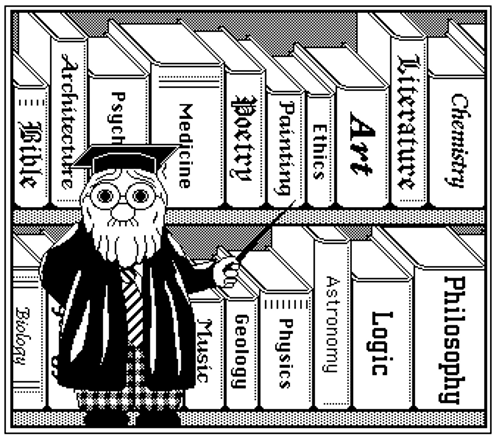
The Person as Science and Art.
The Person as a Multidimensional Unity: The knowledge about ourselves and the universe is a description of patterns that underlie the complexity of our being in the world. It reflects the unconscious structure of reality. We as persons exist in a flux of being which is organized into perceptions, feelings, images and so on. There are organizing principles which can be discerned as forming experiential phenomena out of the chaos. These organizational or structural properties are intrinsic to and are totally involved in the creation of the particular experience. It is because of this that the person is unconscious of these tendencies which are revealed as they bring into being the specific phenomena which reason then attempts to explore.
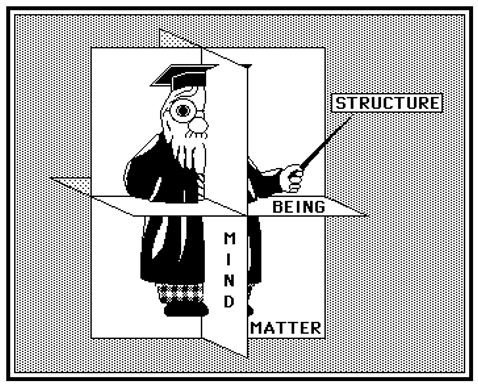
The physical dimension is that system of phenomena described by the natural sciences. It includes the the person as a biological structure; she has form and substance as part of a larger material reality. This may be illustrated by examining the particular case of the hand which is currently holding down this page; it can be imagined to be made up of cells, molecules, atoms, and subatomic particles, acting in accordance to the traits that define them. This hand is a collection of processes which are intrinsic to the universe in its entirety and which interrelate to produce this particular event at this moment. That which creates the person is basically the same as that which underlies the universe. Though we may label events as being internal or external, physically speaking, the distinction is arbitrary. Not only do the same physical principles apply inside and outside the body, but there also exists an intimate interaction between these two aspects of the person-in-the-world. Extending through all levels of physical structure, the relationship is such that the hand transforms and is transformed by that which is outside it. The person is body; whatever we learn of our physical universe is ultimately a reflection on who and what we are.
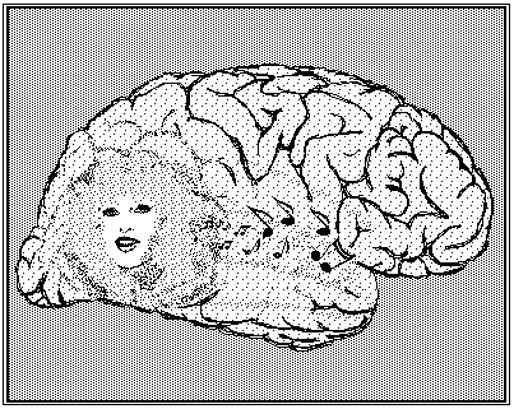
The Psychocerebral Unity that is the Person
While descriptions of interactions between material substances illuminate some of the processes that underlie experience, they are insufficient in explaining the complexity of the person. There is also a psychological dimension; at this moment neurological processes are organized according to structures of meaning. This universe of mind is one of meaning, emotion, social structure, intrapsychic events and interpersonal relationships. Without an appreciation of the laws and properties of this realm, human behaviour is not understandable. Without the existence of this dimension these questions would not exist.
The Person as Structure: The structure which constitutes the person has physical and psychological aspects. We are biological entities made up of the same stuff as the rest of the universe. Because reality does not comply with our hopes and dreams, because it does not readily respond to our demands, there may be a sense that one is subject to its laws. One may alternatively that one, perhaps, is an expression of these laws; in fact, the person is the physical laws. That which underlies the theories we develop about nature is that which is the substance and form which we are.
The person is not only a physical being but has an additional mental dimension as well. The person dwells in a world of symbols. We can, for example, describe the experience of being here in terms of biological processes which are part of the material universe or as psychological phenomena which are manifestations of the world of the psyche. In order to understand the person more fully, each of these dimensions, including those of being and structure, are necessary. None is sufficient however; and ultimately too, all explanations must fail to reach and encompass the person who is the explanation itself.
The intellect is finite: we get only fragments of who and what we are. Ideas of wholeness, of being, of free choice and so on tend to be ignored by scientific disciplines to a large part. This is true of psychiatry as well; the focus is on structural elements which can be predicted and manipulated. Observations and conclusions involve the isolation and organization of events. Distortions occur when we forget that the understanding we have is only one aspect of whatever totality it is we are studying. In that case we must consequently be ignoring other possible attributes that belong to the object of investigation. For example, in medical school students learn about the human body partially through the dissection of cadavers. Something of the gross structure of a human being is preserved as proteins are denatured and the natural process of decomposition is unable to procede. While the dissection lab provides the opportunity to develop mental images of muscle and organ, structure and functioning, in the end, one studies neither life nor death. In histology, the slides that are poured over endlessly have about as much to do with living tissue and the person as does, say a rock from the pertrified forest with wood and the original tree. Though these methods are necessary in providing us with information about ourselves as physical beings, they can affect one’s view of what constitutes a person. It is easy to imagine that the cadaver is a human being, that those remains were once inhabited by a person. The person has in fact died; the person was the totality of the living body in the world.
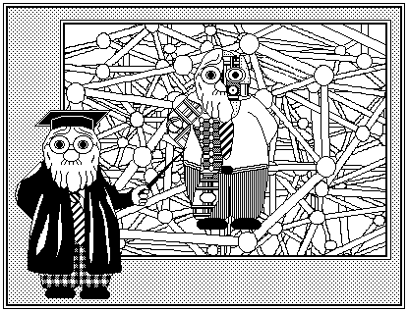
The Person as Structure
Though one may understand the person-in-the-world in terms of particular structural patterns, she remains a psychophysiological unity. Mind and matter are one in the person. In order to understand this further let us focus on the experience of this moment. The texture of this page may have been and probably is now a part of the experience. From the actual somatosensory perception, one may go on to experience a series of images related to the physical make-up of the paper and the neurological processes that are involved in the organizing the information. One notes that there exists a discrepancy between the actual sensation of the page and the imagined physical events taking place in the paper and in one’s brain. While the imagined physical structure correlates with the sensory experience, it is clearly not identical. Whatever physical reality is, in itself, since it is also the actual experience itself, its true nature must be very unlike the impressions and pictures that come to mind. Both the hand and the mental processes currently involved in trying to understand it are psychological phenomena involving symbols and social structures; they are, as well, ultimately physical phenomena whose structure can be understood in terms of body interacting with environment.
In Psychiatry we are learning more about ourselves now that it is possible to do receptor assays, P.E.T. scans, and increasingly sophisticated statistical studies. Otherwise undetectable patterns are made visible by such techniques. However, because the technique only focusses on certain variables, the understanding that evolves will be only one among many. Each method increases our understanding of what it means to be human; difficulties and distortions occur when one adheres to a particular view as representing the whole and ceases to be open to new possibilities. In effect, the relationship between oneself and the other is a fountainhead of sensations, impressions, feelings, and ideas. The person is ultimately a mystery; the more we know the more profound the mystery becomes.
While we may describe these aspects of the person as forming her structure, we may in addition conceive of them as manifestations of a creative process whereby the person is brought into existence. The structural elements that constitute the person are only a part of her totality; there also exists the reality of the person as a creative being. The person is a participant in a process of universal creativity, creating herself though acts of will. At the same time there are givens which are outside her will; the person does not create herself in her totality. Just as the person’s physical nature is part of a larger physical universe, likewise, her will is an aspect of the coming into being of the entire universe. Creation, as the source of the universe and of the person, transcends their structure in that it generates that structure. Labelling this a dimension of the person, it can be understood as that of the spirit. In addition to creativity and will, other qualities that would be also labelled as spiritual include those of love, courage and ultimate meaning. Anxiety and despair are also linked to the spirit; while they involve physiological processes within the central, peripheral and autonomic nervous systems along with others in the musculoskeletal, endocrine, gastrointestinal, integamentary, and cardiopulmonary systems, these are emotional states which the person becomes through confrontation with nonbeing. There is one person but we can talk about her existence, her structure, her physical and her psychological properties.
Understanding the Person Scientifically: When we try to understand the person as structure, we assume that there are basic processes whose interplay is responsible for the complexity of phenomena. Our reason tries to elucidate their nature and views them as universal principles. Scientifically, when a phenomenon is observed it is understood in terms of known theories; if the theories are incompatable with this new fact, an alternate explanation is sought. A hypothesis is proposed explaining what factors might combine to produce the observed event. For a hypothesis to be scientifically worthwhile, it must offer some test implications on which it can stand or fall. One tests a hypothesis by creating a specific set of circumstances and the observing the sequelae. Variables are manipulated producing certain results which either support or refute the hypothesis. Regardless of the number of implications tested and found to support the hypothesis, one can never assert that the hypothesis is entirely true; uncertainty is an ever-present reality. Supporting outcomes do, however, provide partial confirmation as the hypothesis could have been proven false, leading to its rejection. Scientific method makes use of this process of deductive reasoning to ensure that statements are more than just opinion or fantasy; scientific truths may not be entirely correct but do hold a validity grounded on reproduceable observations.
Understanding the Person Scientifically: When we try to understand the person as structure, we assume that there are basic processes whose interplay is responsible for the complexity of phenomena. Our reason tries to elucidate their nature and views them as universal principles. Scientifically, when a phenomenon is observed it is understood in terms of known theories; if the theories are incompatable with this new fact, an alternate explanation is sought. A hypothesis is proposed explaining what factors might combine to produce the observed event. For a hypothesis to be scientifically worthwhile, it must offer some test implications on which it can stand or fall. One tests a hypothesis by creating a specific set of circumstances and the observing the sequelae. Variables are manipulated producing certain results which either support or refute the hypothesis. Regardless of the number of implications tested and found to support the hypothesis, one can never assert that the hypothesis is entirely true; uncertainty is an ever-present reality. Supporting outcomes do, however, provide partial confirmation as the hypothesis could have been proven false, leading to its rejection. Scientific method makes use of this process of deductive reasoning to ensure that statements are more than just opinion or fantasy; scientific truths may not be entirely correct but do hold a validity grounded on reproduceable observations.
Understanding the Person Scientifically
The test implications of a hypothesis are usually stated in conditional manner; given a certain situation, a specified outcome will occur. Testing involves the observation as to whether or not the predicted result occured under the given conditions. One either manipulates the variables or waits for the circumstances to occur.
As noted above the hypothesis is still not proved true, even if given a supporting result; it is conversely also not necessarily proved to be false if the findings are negative. Every hypothesis assumes that certain factors are extraneous; because of this there is always a number of auxiliary hypotheses associated with it. A hypothesis may be valid but unproved because some unrecognized variable affected the outcome. The accuracy of the equipment is one such factor which must be considered in the auxiliary hypotheses. We are restricted in our testing by the level of technological sophistication of our time; therefore, not all hypotheses permit adequate testing when they are formulated. Our current technology cannot, for example, detect conclusive evidence of brain abnormality in schizophrenia; this does not mean, however, that this illness has no organic basis.
When a crucial test invalidates a certain hypothesis, the proponents of the failing theory will generally try to show how it was not the hypothesis that failed, but one of the auxiliary hypotheses. At any rate, crucial tests do not disprove an entire theory, but only certain aspects. At the same time, the hypothesis or theory that has been given support is not proved since no matter how extensive the data, no hypotheis can be proved with full certainty. In the case of rival theories, generally, one is considered righter and righter by increasing numbers of people, while the other becomes more and more cumbersome. Ad hoc hypotheses, whose sole purpose is to save the theory but lead to no further test implications, are formulated to account for the unpredicted phenomena. A theory can become so complex that it immediately folds when a new explanation is found. Usually, in time with the accumulation of more data, the scientific community shifts to the theory which is simpler, more inclusive, and hence more credible. Scientific laws can be understood as the link by reason which provides a connection between different phenomena. Through these laws it becomes possible to explain an event by associating it to other events. Theories are introduced when research has suggested a uniform system of empirical laws. Theories provide us with a deeper and richer understanding of the events that underlie appearance. Diverse phenomena are traced back to some common basis. Theories are a means of explaining and predicting events in the world and offer a comprehensive view into the workings of nature.
Being and the Person: The person clearly exists and she does so as a dynamic creative unity. Vision, hearing, touch, thought, and feeeling are manifestations of the person, elements of her totality. The senses, thought, dreams and feelings are aspects of individual being which is a part of the being which makes up the rest of the universe. Though each experiential world is ultimately united with that of the other as an aspect of the larger universe, it paradoxically, remains individual and separate. Persons are frames of reference existing within and relating to aspects of the same shared universe; though in union with the Being of the Totality each individual is experientially a unique irreplaceable reality.
The Person Centred on Being
If we view being and structure as fundamental aspects of the person and hence the universe of which the person is an expression, the relationship between them can be pictured as a ground of being from which the structure is eternally created. Perhaps this can be made clear by describing the act of writing these words. Clearly this experience is the latest of links that constitute the chain of my history. In one sense I am here because of things that happened in the past. This explanation is not sufficient however. My being here is generated into existence at this moment. These words emerge as they are brought out through me; the fact of their existance makes me who I am. Were I to cease this activity, I would be a different person. The goals that pull me forward were formed in the interaction between the world and my desires. The strivings that underlie who I am, seek expression and fulfillment as best they can, given the circumstances into which I have been cast. In another sense, what is occurring might be described as the universe creating, moulding itself through me. The desires which spur me to write this all down, though they can be understood in terms of the past, exist now. The person that has developed as a result of these driving forces was shaped through interactions with others and the world; past meeting with others have resulted the relationships and possibilities that exist currently about me. Desire has brought this “me-in-the-world” into being; that which remains unfulfilled exists now and drives me to bring it into existence. I am being created now. My life might be likened to a wheel with being at the centre, bringing me into existence at each particular time in my life. Finite structure is thus a manifestation of Being which is eternal and at the heart of all things.
Next Page
 Louis Canella, M.D.